What customers see before they reach your website
By the time someone reaches your website, they've often already formed an impression of your business — on the search results page, among your reviews and competitors, in a place most owners never think to look.
By Kingsley
Updated
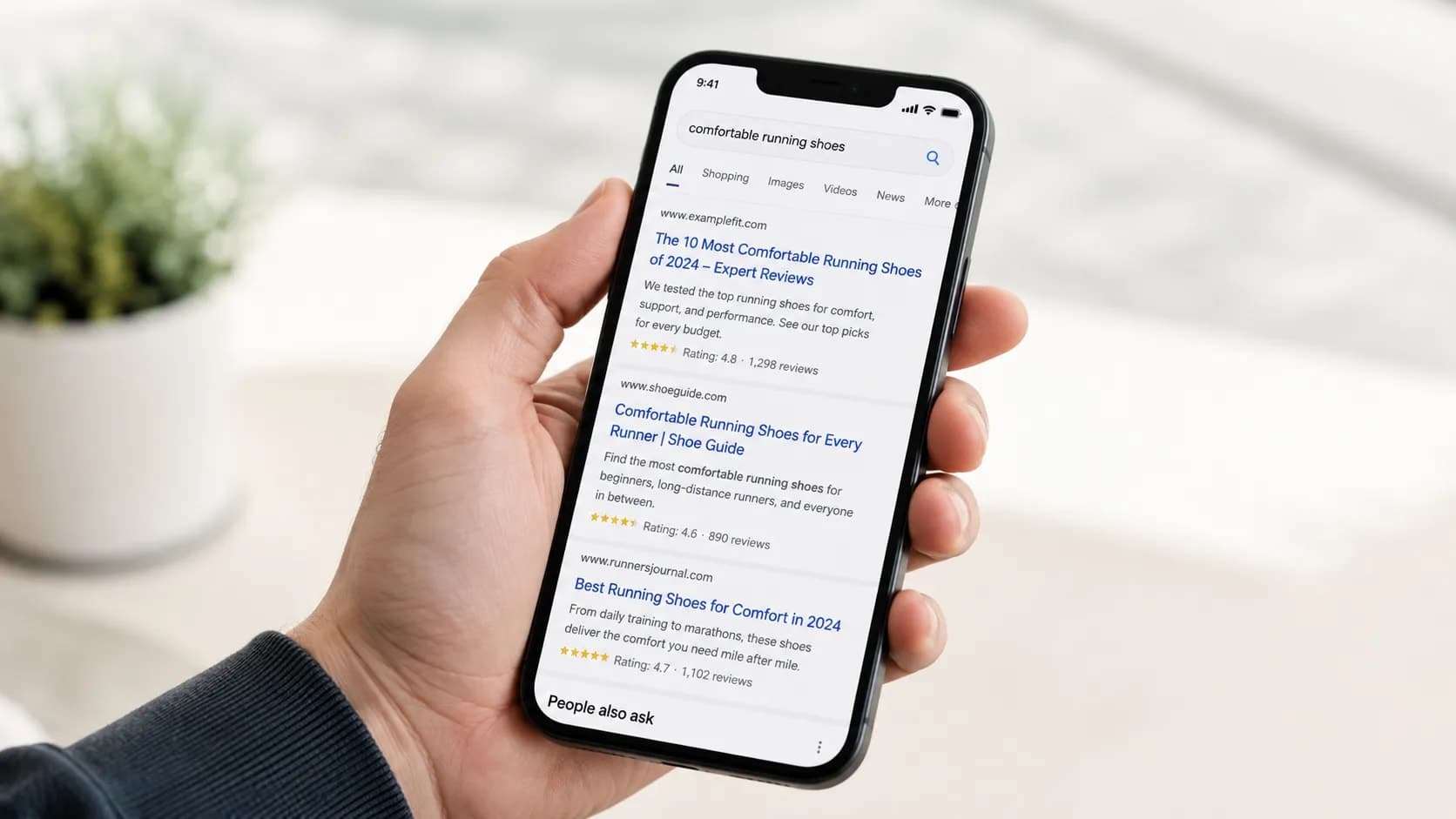
By the time someone arrives on your website, they have often already formed an impression of your business — and it happened somewhere you don't control and may never have looked.
When a person searches for you, or for what you offer, the first thing they see isn't your site. It's the search results page: a list of options, each a few lines long, sitting among your competitors, some reviews, a map, and whatever else the search engine has decided to show. For many customers, this page — not your homepage — is where the first judgment is made, and some never get past it. Understanding what lives there means understanding a part of your business you probably think of as invisible.
The results page is a storefront you didn't design
Your listing in search results is a small advertisement you may never have written on purpose. The title and the line beneath it are usually drawn from your site, and if you haven't shaped them deliberately, they've been shaped by default — sometimes into something vague, awkwardly cut off, or oddly chosen. Two businesses side by side, one with a clear and deliberate listing and one with a machine's best guess, are not competing on equal terms. The gap costs nothing to close once you know it's there.
Then there is everything around your listing. If you have a local presence, there is often a map and a profile carrying your hours, your photos, and your reviews — a second storefront, sometimes visited more than your website itself. Reviews sit in plain view. Competitors sit one line away. A searcher forms a view from the whole page, and much of that page is assembled without you in the room.
What you can actually do about it
You have less control here than on your own site, and far more than none — and the first step is simply to look. Search for your business, and for the things a customer would type to find a business like yours, then read the whole page honestly, as a stranger would. Seeing yourself the way the market sees you is a slightly strange experience, and a clarifying one.
Then shape what you can. The listing drawn from your site can be written on purpose rather than left to default. A local profile can be claimed, completed, and kept current rather than half-filled. Reviews can be invited rather than left to chance. None of this is exotic; most of it is simply attention paid to a place most owners never think to visit.
The deeper point is that your website does not begin at your website. It begins wherever a customer first meets your name — and for most of them, that is a page you don't own, among competitors, read in a few seconds by someone deciding whether you are worth a click. Knowing that page exists, and that it is yours to influence, is most of the advantage.
- first impressions
- local presence
- search